Paving the Way - Fantastic Female Photojournalist
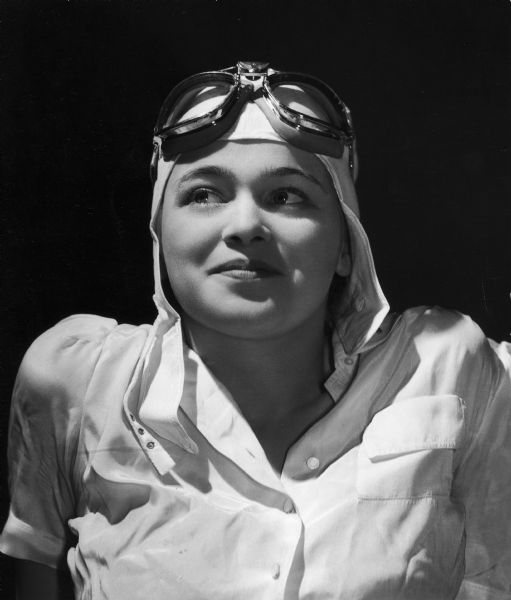 |
| Chapelle in flight goggles Photographer unknown 1940 |
When we study the evolution of photojournalism, we often focus on the power of the image, the moment frozen in time that shapes how the world remembers conflict, courage, and truth. Yet behind every photograph is a person who risked everything to capture history. Among the earliest and most fearless of these was Dickey Chapelle, a woman whose lens captured not only the violence of war but also the resilience of those who endured it. Her story is one of extraordinary bravery, unrelenting determination, and the relentless struggle against the barriers imposed on women in journalism.
Born Georgette Louise Meyer in Milwaukee, Wisconsin, in 1918, Dickey Chapelle’s fascination with adventure began early. She learned to fly as a teenager and idolized Arctic explorer Admiral Richard Byrd, even adopting “Dickey” as her professional name in homage to him. From the start, she dreamed of doing what few women dared: documenting history from the front lines. According to the Smithsonian Air and Space Museum, she began her journalism career at MIT, where she studied aeronautical engineering before leaving to pursue photojournalism full time.
However, the news industry she entered in the 1940s was built by — and for — men. Editors routinely told her that war coverage was no place for a woman, that she was too fragile, too polite, or too distracting to be allowed into combat zones. But Chapelle refused to accept the limits society placed on her much like those who came before her such as Frances Johnston as mentioned in Professor Nordell's Module 9 video. As the National WWII Museum notes, she took every assignment she could, often traveling at her own expense, sneaking onto military planes, and defying orders to reach the front lines.
Her determination paid off when she became one of the first female correspondents to cover the Pacific front during World War II. Embedded with U.S. Marines in Okinawa and Iwo Jima, Chapelle documented the suffering of soldiers and civilians alike, capturing images that humanized the chaos of war. Despite her persistence to cover the war, she was still a target for military brass. Military officials often accused her of being reckless or emotional; male colleagues dismissed her work as sensational or unprofessional. At one point, she was even arrested by the U.S. military for crossing into a restricted combat zone — a risk that nearly cost her career but solidified her reputation for courage.
After the war, Chapelle continued to chase stories from the world’s most dangerous places. She photographed the Hungarian Revolution in 1956, smuggling film out of the country hidden in her bra after being detained by Communist forces. Later, she covered conflicts in Cuba, Algeria, and Vietnam, documenting the human cost of political upheaval long before mainstream American audiences paid attention. Her ability to connect with soldiers, civilians, and rebels alike reflected a kind of empathy that set her apart from her peers. According to the National Press Photographers Association, Chapelle’s reporting combined “grit and grace,” a combination symbolized by the pearl necklace she always wore beneath her flak jacket.
Still, her path remained riddled with obstacles. Her presence on the battle field was in constant question with editors, with many assuming her photographs were taken by men. In an era where women were expected to cover “soft news” or homefront stories, Chapelle fought for every assignment. She endured condescension, pay inequality, and institutional exclusion from the male-dominated press corps. Her work served as a living rebuke to the belief that courage and competence were gendered traits.
Tragically, her career — and her life — ended in Vietnam on November 4, 1965. While accompanying a Marine patrol near Chu Lai, she was walking behind a lieutenant when he accidentally triggered a land mine. The explosion sent shrapnel into her neck, severing her carotid artery. As she lay dying, Marines rushed to her side. One held her hand as she spoke final words: “I guess it was bound to happen.”
 |
| Chapelle Recieves Last Rites - photo by Henri Huet Nov 4th, 1965 |
Photographer Henri Huet captured that moment — her body cradled by soldiers — in one of the most haunting images of the Vietnam War. According to the Women’s Memorial Foundation, Chapelle became the first American female journalist to be killed in combat, an honor she neither sought nor feared.
Her death was mourned around the world, and yet, her legacy had only begun. Chapelle’s career opened doors for the next generation of women photojournalists who would cover wars in Afghanistan, Iraq, and beyond. The International Women’s Media Foundation later honored her as a forerunner of women’s rights in media — a pioneer who redefined what it meant to be a witness in war.
To understand Chapelle’s journey, we must place her in the broader context of women’s ongoing struggle for equality in the workplace. Much like female nurses, scientists, and engineers of her era, she faced discrimination that attempted to limit her opportunities and voice. Even today, reports such as McKinsey & Company’s Women in the Workplace 2023reveal that women continue to face bias in leadership, pay, and representation. Chapelle’s determination — her insistence that she belonged in the field — reflects the same fight still being waged by women across professions.
Her story reminds us that courage does not come from the absence of fear, but from persistence in the face of it. Chapelle’s photographs are not just records of war; they are testaments to her defiance, proof that a woman could face the same dangers as any man and still see the world through a compassionate lens.
When we look at her images today, we see more than battlefields and soldiers. We see a woman who refused to accept invisibility, who risked everything so that truth would not die in silence. Dickey Chapelle paved the way for the future of women in photojournalism.
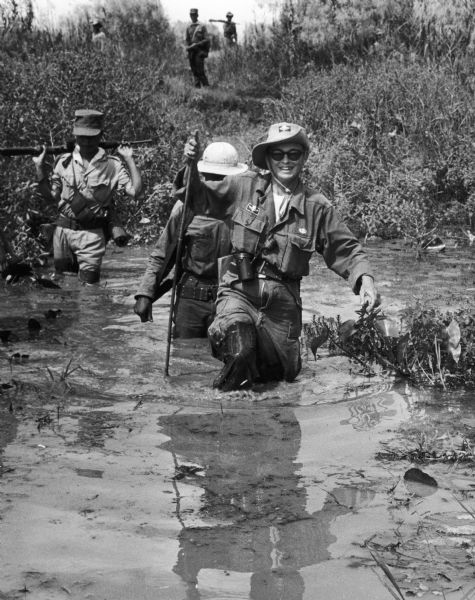 |
| Chapelle in Vietnam photographer unknown 1962 |
After reviewing the module content a plethora of times and reading about Dickey Chapelle, I took the time to listen to the Lynsey Addrio video for a countless time. On the topic of war, Lynsey states, "..we all make great sacrifices to be there...women lend a different perspective than men in some conflicts and to some stories." Chapelle wasn't simply a conflict photojournalist, she was a pioneer for women covering a two sided coin, a catalyst for those who would come after her to have the right to document those participating in the conflict and nonparticipants who ultimately suffered as a result. Much like Anja Niedringhaus, who was killed covering the 2014 Afghanistan elections and posthumously honored, Chapelle is remembered for her bravery and comittment through the Dickey Chapelle Award given by the Marine Corps League.
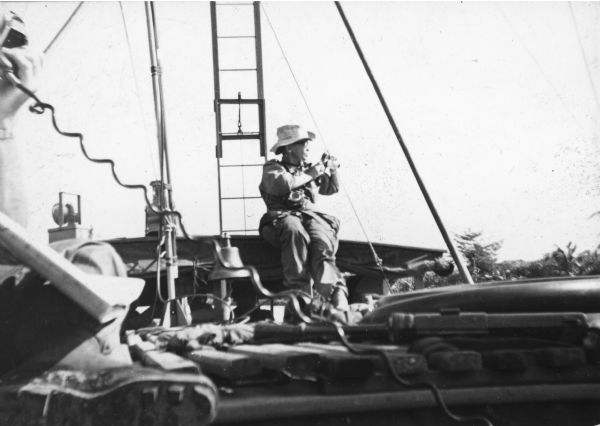 |
| Chapelle on a command ship photo by Lt. Meyerkord 1964 |


Comments
Post a Comment