Personal and Photojournalistic Ethics
 |
| Shani Louk October 7th, 2024 photographer unknown |
To dive into ethical dilemmas in photojournalism, I would like to turn to a recent event in Gaza. On
October 7th, 2023 at a concert in Israel, a tragedy took place. An onslaught by Hamas at the concert venue ended the lives of 1,200 men, women, and children. In the aftermath of the attack, a photo of Shani Louk - lifeless, half naked, being hauled away in the back of a truck surfaced. This photo, taken by Ali Mahmud, became the face of the October 7th attacks. This photo brings about several ethical dilemmas, the first being: the photo was taken by a Hamas connected freelance photographer, and later used and shared by the Associated Press. The second issue is: where is the line between documentation and humanity when it comes to photojournalism in a wartime setting? Or whenever a person is in danger and there is an opportunity to help? Lastly, is this even wartime photojournalism, or simply a terrorist attack where the victors carry away what they deem as spoils?
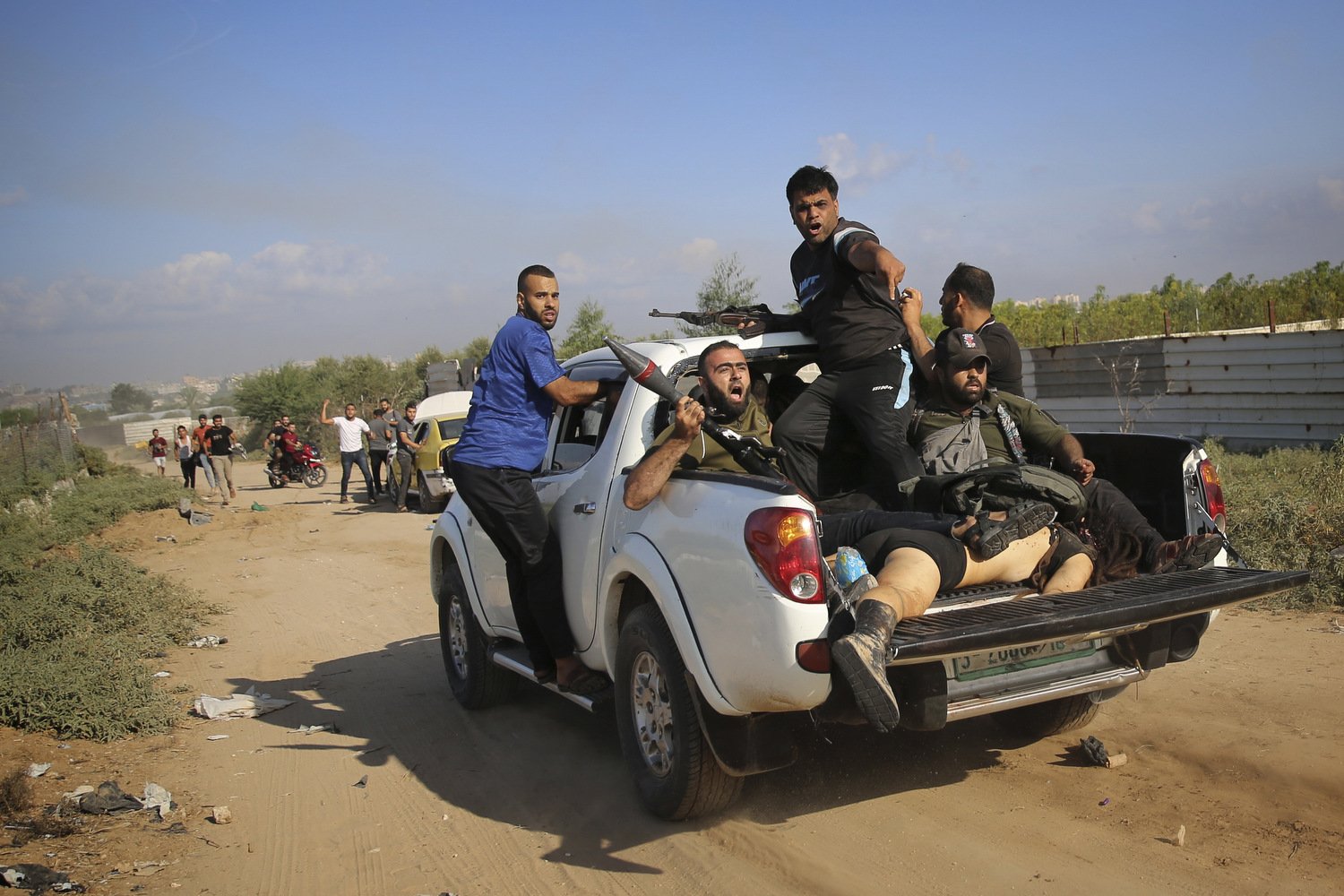 |
| Shani Louk in the back of a truck being taken to unknown loaction Oct. 7, 2023 Photo by Ali Mahmud |
My personal ethics and morals revolve around respect for others, conern for the well-being of those around me, empathy, and kindness. Seeing how the above situation unfolded is crushing when thinking about societal ethics. An unknowing, unwilling, noncombatant had their life ended - far too early - and was then made the face of that initial attack in a way that was demeaning, demoralizing, and lacked respect for human life. Furthermore, the widespread use of this photo made me think of one very specific line from our module reading. Professor Mark E. Johnson stated of the New York Post using a photo of a man about to be hit by a subway train, "The issue is really whether the images should have been run." This statement, as simple as it might be, tells me there is a deep ethical divide, one where people know it is wrong to benefit from the suffering of others and another where a person, an editor, a photojournalist believes that the suffering may bring them fortune or fame.
While documenting these atrocities is important, a line should be drawn between sensationalism and documentary. Where that line might be is beyond me to discern. In the case of Shani Louk, the Associated Press photographers who captured that image won first prize in the Pictures of the Year competition. This is not situation where people would not have known there was a terrorist attack had this photo not been taken as much of the vehicle column were streaming or recording and posting it live. To me, the photo frames men who callously took a life and wanted to pose with the body. No respect was given to Shani by the men with guns, nor was it given by the man who wielded a camera like a gun. No consideration was given to her family having to constantly relive the intense pain of the loss of a loved one. A camera is just as dangerous as a gun if used improperly, and we should all focus on what the impact on those around us would be if we take that picture.
 |
| Shani Louk's parents May 18, 2024 Photo by Rami Amichay |


Comments
Post a Comment