Can Photographs Change the World?
 |
| Photo by Austin Magnuson |
The above photo is from a JEMS article published October 20th, 2020. This period during the COVID 19 pandemic was stressful for all medical providers. Being a paramedic myself at the time and being the first point of contact during such an uncertain time was terrifying. Throughout my paramedic education, we were taught that, "Once you get there, the emergency is done. It is your duty to bring a semblance of calm to the patient no matter the issue." A tall order for any situation, let alone one where you are completely unsure if your intervention will be able to keep someone alive long enough to get to the hospital. Typically, paramedics in this area see one or two calls a shift where the certainty of the patient is questionable - during the pandemic, it was almost every call and it spanned ages. Throughout this time, I watched as some of the most diligent, brilliant minds of prehospital EMS silently slid away. After having to respond to some of the most difficult calls, performing every possible intervention several times a day to keep someone breathing, having to don and doff personal protective equipment in 100 degree heat, to be unsure if you might be one to spread disease so you sleep in a hotel away from family, the mental toll that burdened those who were veterans of the field was too much and they moved away from prehospital care. While this photo shows a group taking the wellbeing of others in their hands, long before the pandemic, the world was slightly more confused about illness and it took much more to bring awareness and create action.
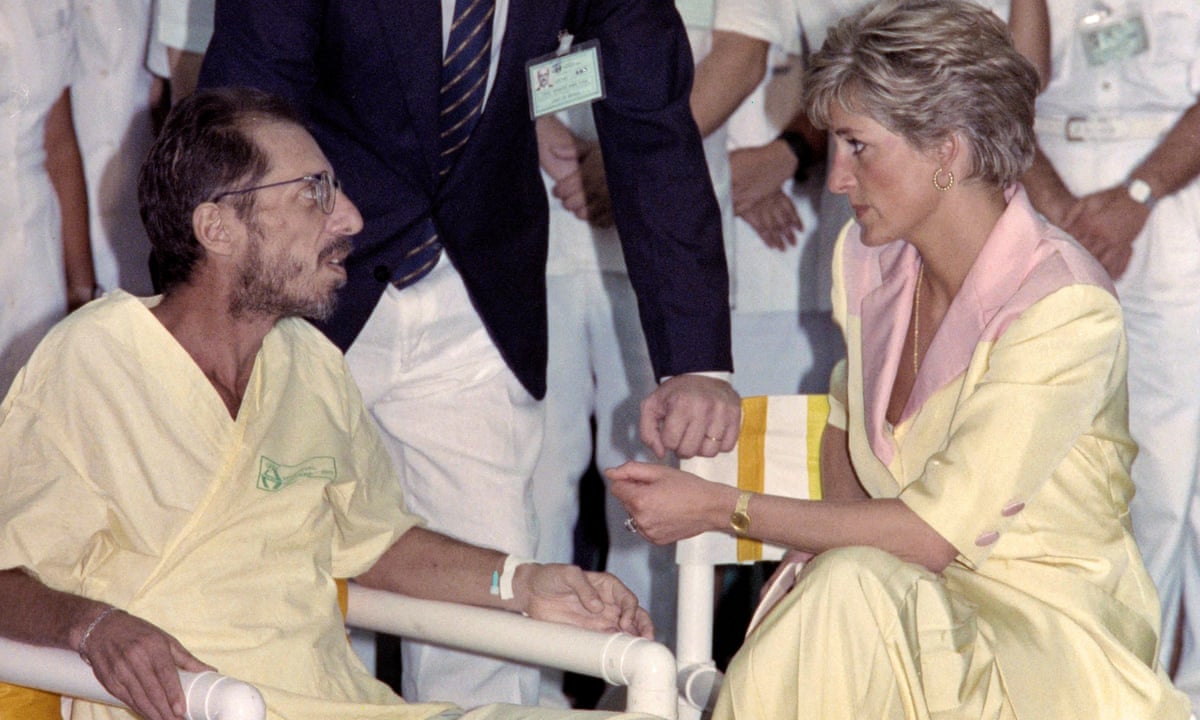 |
| Princess Diana visiting HIV patients. Photo by Carlos Sanata 1991 As Johnathan Klein states in his TedTalk, "..images provoke reactions and those reactions have caused change to happen." Here was see Princess Diana visiting patients who have been diagnosed with HIV. At the time, in the 1980s, little was known about HIV - how it was transmitted, if or how it could cured - the only thing that was known at the time, was it had an incredibly high mortality rate. Having close contact to someone with HIV, was exposing yourself to an unknown and almost certainly getting the disease. Princess Diana wanted to change the public perception and stigma around the disease. Instead of being fearful and allowing the unknown dictate that anyone with HIV be sequestered, Princess Diana refused personal protective equipment and hugged these patients. Her actions captured that day changed how the world viewed not only the disease itself, but those who had the disease. Much like Klein, Beatriz Guerrero Gonzalez Valerio writes, "Nowadays there are photographers with the same concerns who seek to persuade their contemporaries to change the world and mobilise [sic] consciences." It seems as though there is a broad understanding that if we want to see change in the world around us, it would behoove not only photographers, but the world at large to figure out what emotion exactly calls others to want to enact the change we wish to see. In todays era of media, it is becoming more and more difficult to find news that is far from the overburdening reach of umbrella holding parent companies. As noted in the module 3 readings, we see that most recognizable media channels all fall under the control of a major company worth typically hundreds of billions of dollars. This practice has been going on since the 1950s with newspapers. According to the Hussman School of Journalism and Media, " As reported in the previous section, 1,300 daily newspapers were owned by independent publishers in 1953. By 1980, the number of independent newspapers was about 700." The major issue with a concentration of media is the desert it creates for consumers. It leaves little to no diversity in coverages and controls what and how things are disseminated. noted in the Berkeley High Jacket article published February 8th, 2021, "Research suggests that more concentrated media ownership also results in a conservative shift in the ideologies being spread." As noted in the module readings this week, there has been a surge in citizen journalists throughout the world. These freelance citizen journalists act as a type of check and balance to filtered media and endure untenable situations to document and provide balance to a skewed system that is seemingly designed to keep people uninformed and biased. Our responsibility to one another is to question all forms of media however to be open to other forms of media that are not commercially backed. Local news might be more accurate and unbiased coming from a citizen journalist, the local nightly news source might be "cherry picking" stories. We all must remain vigilant if we want to be a true worldly person. |


Comments
Post a Comment